Press Start to Feel Better: The Quiet Way Games Are Helping People Cope
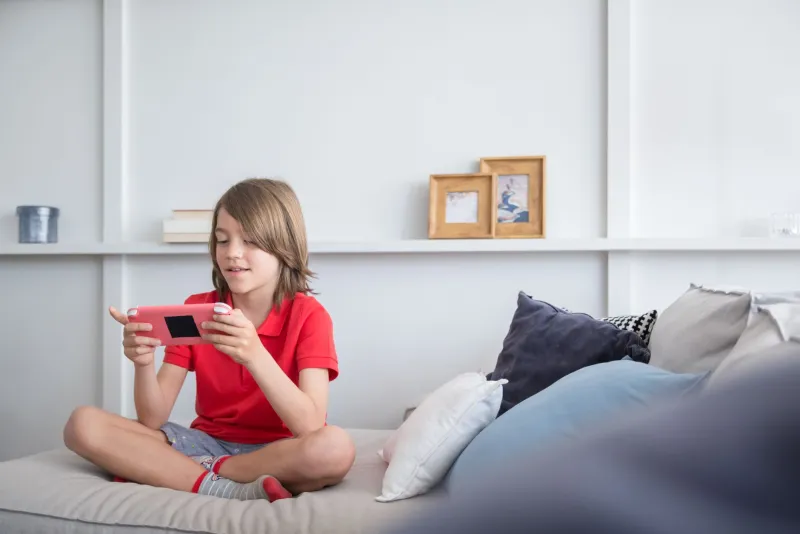
Sarah, a 34-year-old teacher from Columbus, Ohio, doesn't describe herself as a gamer. But every night after school — after the grading and the parent emails and the low hum of anxiety that follows her home — she opens her Switch and spends an hour in a quiet pixel village where nothing bad can really happen.
"I don't know how to explain it," she says. "It's not that I'm avoiding my problems. It's more like I'm putting them down for a little while so I can pick them back up without shaking."
She's not alone. And what she's describing isn't a quirk or a guilty pleasure — it's something that researchers, developers, and mental health advocates are starting to take seriously as a genuine wellness phenomenon.
Something Is Happening Here
The conversation around gaming and mental health has historically been dominated by concern. Screen time warnings. Addiction studies. The usual hand-wringing. But a quieter, more nuanced story has been developing underneath all that — one where games, particularly indie and casual ones, are functioning as unexpected emotional anchors for people navigating anxiety, depression, grief, and burnout.
This isn't about games replacing therapy. Nobody credible is suggesting that. But between the extremes of "games are harmful" and "games cure everything" is a real and valuable middle ground that deserves more attention.
A 2021 study from Oxford University found that players who reported feeling positive about their gaming time showed measurable improvements in wellbeing — and that the relationship between gaming and mental health is far more dependent on how people play than how much they play. That framing matters. It shifts the conversation from quantity to quality, from restriction to intention.
Developers Who Design With Intention
Not every indie developer is thinking about mental health when they sit down to build a game. But a meaningful number of them are.
Amber Isles Studio, the small two-person team behind the cozy exploration game Meadowsong, built their entire design philosophy around anxiety reduction. "We thought a lot about what makes people feel safe," one of the co-founders explained in a community post earlier this year. "No timers. No failure states. No jump scares. Everything in the game is designed so that nothing can go permanently wrong."
That philosophy — sometimes called "cozy game design" — has become a genuine movement in the indie space. The hallmarks are recognizable: soft color palettes, gentle music, forgiving mechanics, and worlds that feel like they were built to welcome you rather than challenge you. These aren't accidental aesthetic choices. They're intentional emotional architecture.
Jen Zee, the art director behind Supergiant Games, has talked about the deliberate warmth in the studio's visual language — the way color and character design are used to create emotional safety even in games that have difficult themes. The medium, she's argued, has a unique capacity for empathy that other art forms don't quite replicate.
What Players Are Actually Experiencing
For people who've found genuine relief through gaming, the experience is often hard to articulate — partly because our cultural vocabulary for it is still pretty underdeveloped.
Marcus, a 28-year-old in Atlanta who manages generalized anxiety disorder, started playing Spiritfarer during a particularly rough stretch two years ago. The game — which centers on ferrying spirits to the afterlife and saying goodbye — is, on paper, a meditation on grief. Not exactly a light pick.
"I cried probably four times," he says. "But it wasn't sad crying. It was more like — release? Like the game gave me permission to feel things I'd been holding onto."
This is something therapists who work with anxious clients have started noting: narrative games in particular can create emotional distance that makes difficult feelings more approachable. You're not processing your own grief directly — you're processing a character's. But the emotional muscles being used are the same.
Other players describe more straightforward relief: the simple act of having something to focus on that isn't their own spiraling thoughts. Idle games. Puzzle games. Farming sims. The cognitive engagement is just enough to interrupt the anxiety loop without demanding so much attention that it becomes stressful.
The Limits (And Why Developers Think About Them)
Here's where the developers we spoke to got notably careful — and that carefulness itself is worth paying attention to.
The ones building intentionally therapeutic experiences are almost universally reluctant to oversell what their games can do. "I want our game to be a good part of someone's day," one cozy game developer told us. "I don't want it to be the only good part. That's too much weight for a game to carry."
That's a meaningful distinction. Games can reduce stress in the moment. They can provide emotional processing space. They can offer routine, structure, and a sense of accomplishment. What they can't do is treat clinical depression, resolve trauma, or substitute for human connection and professional support.
The risk — and developers who think about this are aware of it — is that a game becomes a hiding place rather than a rest stop. There's a difference between putting your anxiety down for an hour and building a life around avoiding it. Cozy games are genuinely good at the former. They're not designed for the latter.
Some studios have started adding small wellness nudges to their games — gentle reminders to take breaks, drink water, check in with someone. It's a small thing, but it reflects a growing sense of responsibility that the more thoughtful corners of the indie world are taking seriously.
Why We Should Talk About This More Openly
Despite all of this, there's still a weird cultural reluctance to admit that games help us feel better. We'll casually mention that a glass of wine helps us unwind. We'll talk about binge-watching TV as self-care without blinking. But "I play video games when I'm anxious" still carries a faint whiff of embarrassment for a lot of people.
That's worth examining. The stigma isn't really about the activity — it's about who we imagine does it. And as the gaming audience has expanded to include teachers, parents, retirees, and basically everyone else, those assumptions are increasingly out of date.
If a game helps you sleep better, feel calmer, or just get through a hard week with a little more grace — that's legitimate. It counts. You don't need to defend it or downplay it.
Sarah, our teacher from Columbus, put it simply: "I used to feel like I should be doing something more productive with that hour. Now I think — I come out of it a better person to be around. That seems pretty productive to me."
Hard to argue with that.