Your Turn Whenever: Why Sending a Move Feels Like Sending a Message
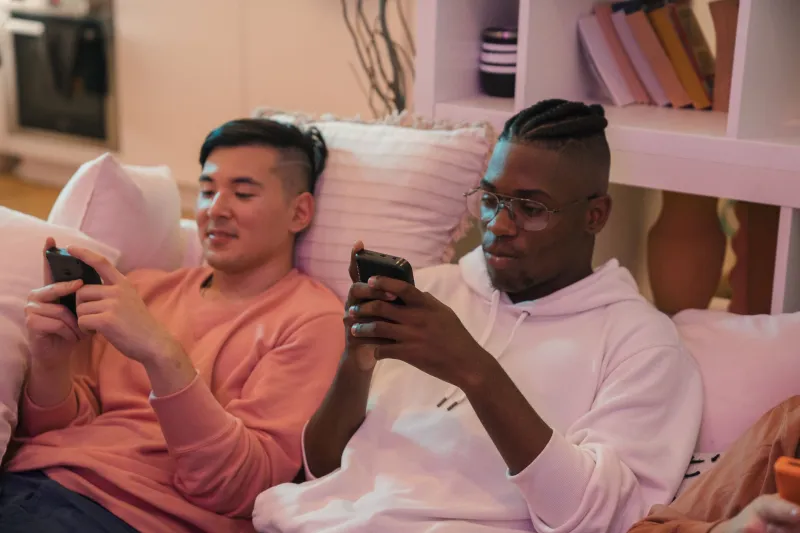
Somewhere in your phone's notification stack, between the work Slack messages and the promotional emails you keep meaning to unsubscribe from, there's probably a little alert that says something like: It's your turn. Maybe it's a word puzzle. Maybe it's a chess match. Maybe it's a mobile strategy game you and your college roommate started playing three months ago, back when you made a half-joking pact to stay in touch better.
Here's the thing: that notification is doing more social work than most of us give it credit for.
The Scheduling Problem Nobody Talks About
Adult friendships have a logistics problem that nobody really prepares you for. When you're in your twenties, coordinating time with friends feels manageable. By your mid-thirties, it's practically a project management exercise. You've got different time zones, different kids' schedules, different work hours, different levels of social energy at any given moment. The idea of a three-hour co-op gaming session requires the kind of calendar alignment that used to just... happen naturally.
And so it stops happening. Not because people stop caring. Because the friction is too high.
Asynchronous games — games where players don't have to be online at the same time — remove that friction almost entirely. You play when you can. Your friend plays when they can. The game holds the space between you, patient and unhurried, until someone has a free ten minutes.
This isn't a new concept, technically. Board games by mail have been a thing since the 19th century. Correspondence chess has a rich, nerdy history that predates the internet by centuries. But the smartphone era has made async gaming so frictionless and so ubiquitous that it's quietly become one of the dominant ways busy adults maintain their social lives — and most of us haven't stopped to notice.
The Turn as a Token of Presence
There's something I've been thinking about lately, which is the emotional weight of a game notification from someone you love.
When your sister sends her Wordle score to the family group chat, she's not just sharing a number. She's saying: I thought of you this morning. I wanted to show you something. When your old college friend finally takes their turn in the word game you've been trading moves in for six weeks, they're saying: I haven't forgotten about you. I was just busy. I'm here now.
These are small gestures. But small gestures, repeated consistently over time, are basically the entire architecture of a lasting friendship. The game just gives the gesture a container.
This is what I'd call the turn as token — the move itself is almost beside the point. What matters is the act of sending it. The acknowledgment that the other person is on your mind. The shared thread that keeps getting picked back up, no matter how long it sits between turns.
What Wordle Got Right (And Why It Spread Like That)
It's worth thinking about why Wordle — a simple word puzzle with no multiplayer mechanics whatsoever — became one of the most socially connected gaming experiences of the past decade. People weren't playing with each other. They were playing alongside each other, comparing results, sharing scores, and building a kind of daily ritual around a two-minute game.
The genius was the constraint. One puzzle per day. No second chances. Everyone playing the same puzzle. That shared limitation created a shared experience — and shared experiences are the raw material of connection.
Lots of indie and casual games have figured out variations on this formula. Daily challenges, shared leaderboards, games where your progress is visible to friends without requiring real-time interaction. These mechanics are quietly revolutionary because they create community without demanding presence. You can be part of something together without having to be there together.
For adults juggling careers and families and the general chaos of being a person in 2024, that's not a consolation prize. That's the whole game.
The New Social Contract
I want to push back gently on the idea that async gaming is somehow a lesser form of social connection — a substitute for the "real" thing. I think that framing gets it backwards.
For a lot of people, async games aren't replacing in-person connection. They're filling a gap that would otherwise just be... silence. A friendship that might drift because there's no practical way to maintain it is instead sustained by a steady exchange of turns, scores, and reactions. The game becomes connective tissue.
And honestly? There's something kind of beautiful about the delayed nature of it. When you take your turn in a game and send it to a friend, you're not expecting an immediate response. You're putting something out into the world and trusting that it'll come back to you when the time is right. That's a different kind of intimacy than real-time chat — quieter, more patient, less demanding.
It's the gaming equivalent of sending a letter. You're not waiting by the mailbox. But when the reply arrives, it still means something.
Not Every Friendship Needs a Schedule
Here's my actual opinion, stated plainly: we've been too rigid in our definition of what gaming together looks like. We've inherited a model that says real multiplayer means real-time — that if you're not in the same lobby at the same moment, you're not really playing together.
That model worked when gaming was a living room activity and your friends were five minutes away. It doesn't work as well when you're 34 and your closest friends are scattered across four states and three time zones.
Async games meet people where they actually are. They don't ask you to carve out a block of time you don't have. They don't punish you for having a busy week. They just wait. And when you come back, your friend's last move is still there, like a little note left on the kitchen counter.
At Milkmaid Game, we're big believers in the idea that playing doesn't have to be a production. It can be a habit, a ritual, a small consistent thing that adds up to something meaningful over time. Async gaming fits that philosophy perfectly — it's low-pressure, high-continuity, and quietly good for you.
So the next time you see that little It's your turn notification, don't dismiss it as a distraction. Consider that on the other end of that game, someone took sixty seconds out of their day to think about you.
That's worth a move.