Small Doses, Big Gains: Why Playing a Little Every Day Beats Marathon Sessions Every Time
Picture the classic milk delivery route. Every morning, same roads, same stops, same rhythm. Nothing dramatic. Nothing exhausting. But over months and years? The driver knows every pothole, every shortcut, every house that leaves the porch light on. That kind of deep, almost unconscious knowledge doesn't come from one heroic long-haul trip. It comes from showing up, over and over, in a low-pressure environment where the stakes are manageable and the repetition does its quiet work.
Gaming works the same way — even if most of us haven't stopped to think about it like that.
The Problem With the All-Nighter Approach
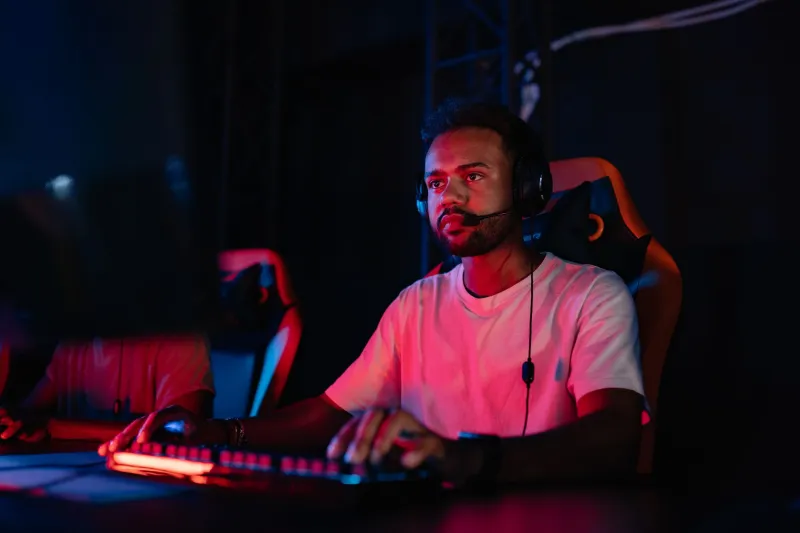
We've all been there. A long weekend opens up, you've got nothing on the calendar, and you decide this is the weekend you're finally going to get good at that game. Eight hours later, your eyes are dry, your back hurts, and you're arguably worse at the game than when you started — frustrated, fatigued, and maybe a little resentful of the whole thing.
Intensive play sessions feel productive in the moment. They have that satisfying sense of commitment, like you're putting in the work. But cognitive science has a different take. When your brain is tired, it stops encoding new information effectively. Motor memory — the kind that lets you nail a tricky platforming sequence or execute a combo without thinking — actually consolidates during rest, not during play. Grinding through exhaustion doesn't sharpen your skills. It muddies them.
"There's a ceiling on what you can absorb in a single session," says Marcus Webb, an independent game designer based in Austin who spent three years building Fernway, a puzzle-platformer that quietly rewards patient, consistent players. "We actually designed some of the later levels with the assumption that players would come back to them across multiple days. The solutions click differently when you've slept on it."
What Compound Progress Actually Looks Like
The phrase "compound interest" usually lives in personal finance conversations, but the concept maps surprisingly well onto skill acquisition. Small, consistent inputs — even tiny ones — stack on top of each other in ways that eventually produce results that feel disproportionate to the individual effort.
In gaming terms, this might look like spending fifteen minutes with a rhythm game every evening. Day one, you're fumbling through the tutorial. Day five, your fingers are finding patterns without much conscious thought. Day thirty, you're clearing songs you couldn't have imagined attempting at the start. None of those individual sessions felt like a breakthrough. The breakthrough was the accumulation.
Jordan Kelsey, a 28-year-old graphic designer from Portland, describes this exact experience with Celeste, the beloved indie platformer that's become something of a touchstone for discussions about difficulty and perseverance. "I played it in short bursts over about two months. I never felt like I was grinding. I'd just pick it up, play until I felt like stopping, and put it down. Then one day I realized I was doing things that had seemed completely impossible when I started. I didn't even notice myself getting better — it just happened."
That's the thing about compound progress. It tends to sneak up on you.
The Psychology of Low Stakes
One reason short, routine sessions work so well is that they strip away the pressure that makes learning harder. When you sit down knowing you've got twenty minutes and no particular agenda, the part of your brain that panics about failure and performance has less to grab onto. You're more likely to experiment, to try something dumb, to play around with the mechanics in ways that actually deepen your understanding.
High-stakes, marathon sessions carry a different psychological weight. You've invested hours. You need to make progress. That urgency narrows your focus and makes you risk-averse — you stick to what you know instead of poking at what you don't. Ironically, the sessions where you care the most are often the ones where you learn the least.
Dr. Priya Nambiar, a behavioral researcher who's written about motivation and habit formation, puts it plainly: "Lowering the perceived cost of failure dramatically increases willingness to experiment. And experimentation is fundamentally how skill acquisition happens. You try something, you get feedback, you adjust. Short, low-pressure sessions create the ideal conditions for that cycle to repeat frequently."
Indie games, almost by accident, tend to be well-suited to this dynamic. Many of them are built in bite-sized chunks — natural stopping points, autosaves around every corner, session lengths that feel complete at twenty minutes rather than demanding two hours. They're not always designed with the science of habit formation in mind, but they often end up serving it anyway.
Building the Habit Without Making It a Job
Here's where a lot of well-intentioned gaming routines fall apart: the moment you turn your casual daily session into a goal, it starts feeling like homework. Suddenly you're tracking your hours, measuring your progress, feeling guilty when you skip a day. The low-stakes magic evaporates.
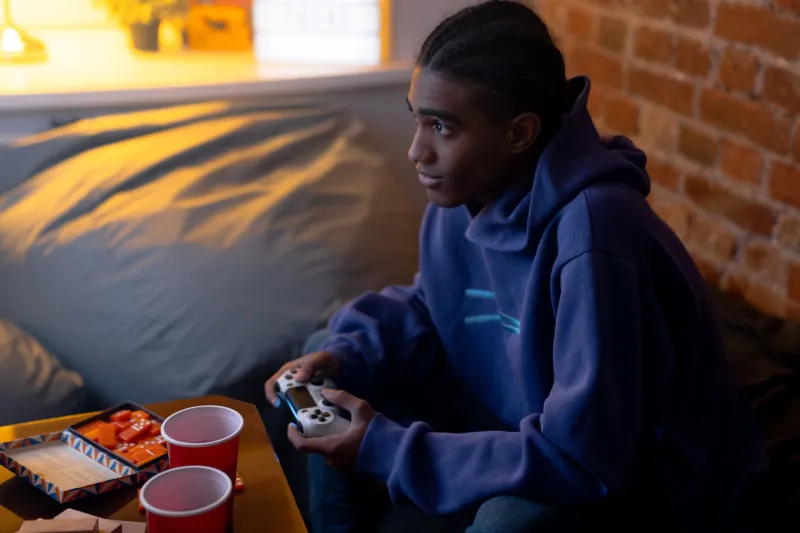
The players who seem to benefit most from routine gaming habits are the ones who keep things genuinely casual. No spreadsheets. No self-imposed quotas. Just a loose, comfortable practice — same time of day if possible, same cozy setup, no pressure to accomplish anything specific.
Marcus Webb, the designer behind Fernway, thinks about this from the development side too. "We want players to feel welcome when they come back, not like they've got homework waiting. The game should feel glad to see you, not impatient."
That framing — the game being glad to see you — is a surprisingly useful mental model. The best daily gaming habits feel like checking in with something you enjoy, not clocking into a shift.
What You Unlock That Grinding Can't Give You
There's one more thing that consistent, unhurried play builds that intensive sessions simply can't replicate: genuine familiarity. Not just mechanical skill, but a real relationship with a game's world, its rhythms, its personality.
Players who rush through games often report feeling strangely disconnected from them afterward. They completed the thing, but they don't feel like they know it. Regular, relaxed sessions create space for the smaller details to land — the ambient sound design, the environmental storytelling, the moments of unexpected humor or beauty that you blow past when you're in performance mode.
Jordan Kelsey noticed this too. "I feel like I actually know Celeste. The mountain feels real to me in a way I don't think it would if I'd just blasted through it in a weekend."
That sense of genuine connection — to a game, to the experience of playing it, to your own growing competence — might be the best argument for the slow, steady approach. You're not just building skills. You're building something that actually feels like yours.
So maybe don't clear your weekend calendar. Maybe just play a little tonight, and a little again tomorrow. The route will start to feel familiar before you know it.