Show Up, Reap the Rewards: How Indie Games Are Making Daily Play Feel Like a Gift
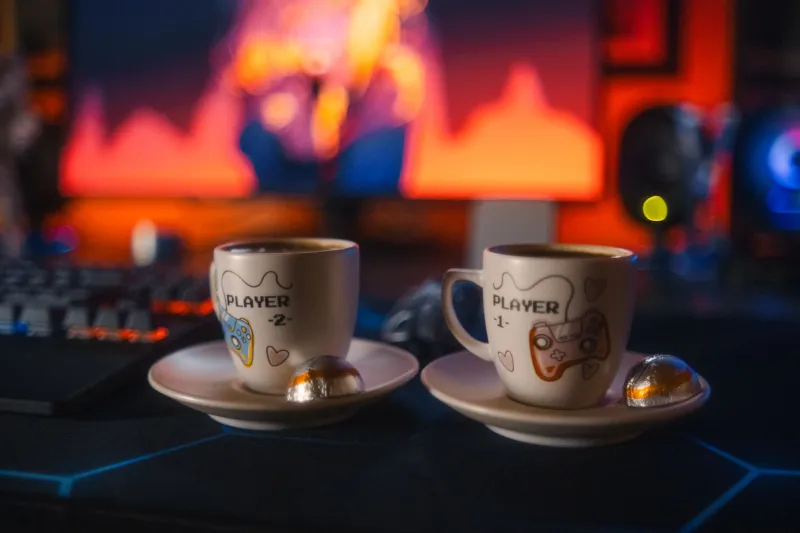
There's a particular kind of morning that a certain type of gamer knows well. Coffee in hand, maybe ten minutes before the day properly kicks off, you open up a familiar game — not because an alert dragged you back, not because a streak is about to expire, but because you actually want to be there. You water your crops. You take a walk along a cliffside trail. You check in on a small digital world that somehow feels like it missed you.
This is the quiet revolution happening inside indie gaming right now. And it doesn't look like a revolution at all — it looks like a Tuesday morning.
The Problem With 'Come Back or Else'
For years, the dominant model for keeping players engaged has been rooted in pressure. Mobile games perfected this playbook: daily login bonuses that reset if you miss a day, energy meters that punish absence, limited-time events designed to manufacture anxiety. The underlying message was always the same — if you don't show up, you lose something.
It worked, in a narrow sense. Retention numbers looked great on spreadsheets. But players burned out, resentment built, and a whole generation of gamers started associating "daily play" with stress rather than pleasure.
Indie developers — many of them working in small teams or solo, often building games they themselves wanted to play — started pushing back against that model. Not always loudly or deliberately, but through the games themselves.
What Stardew Valley Figured Out Early
When Eric Barone released Stardew Valley in 2016, it didn't reinvent farming simulators so much as it stripped them down to something warmer and more human. The game has seasons, yes, and crops that die if you miss their harvest window. But the pace is yours. Nothing screams at you. No notification badge glows red on your phone.
More importantly, the game rewards showing up without punishing staying away. Miss a few in-game days? Your farm gets a little overgrown. Come back? You pick up right where you left off, no penalty, no lost progress, no shame spiral. The world waited for you.
That design choice — subtle as it sounds — is actually radical in context. It signals trust. The game trusts you to return on your own terms. And because of that trust, millions of players have logged hundreds of hours not out of compulsion, but out of something closer to affection.
The 'Short Hike' Model: Small Worlds, Open Doors
A Short Hike, the 2019 gem from Adam Robinson-Yu, takes this philosophy even further. The entire game can be completed in a couple of hours, but its gentle open world invites you to linger. There's no fail state. No clock counting down. Just a small bird on a hiking trip, and a mountain full of tiny, unhurried discoveries.
What's fascinating is how many players return to it — not to "finish" anything, but just to exist in it for a while. It functions less like a traditional game and more like a favorite trail you revisit when you need to clear your head.
This is the heart of what we might call the gentle progression model: systems that acknowledge your effort without demanding it. You make progress when you play. You don't lose ground when you don't. The game is there when you need it, and it's fine when you don't.
Psychology of the Soft Return
So what's actually happening in our brains when a game earns our return visits without manipulating us into them?
Researchers who study intrinsic motivation — the kind that comes from genuine interest rather than external pressure — point to a few key ingredients: autonomy, competence, and relatedness. In plain terms, people engage most deeply when they feel in control, when they feel capable, and when they feel some kind of connection to what they're doing.
Heavy-handed engagement mechanics tend to undermine all three. You're not in control if a streak is forcing your hand. You don't feel competent if the game is artificially gating your progress. And connection is hard to build when the underlying message is transactional.
Gentle progression systems do the opposite. They hand control back to the player. They celebrate small wins — a new recipe unlocked, a new area discovered — in ways that feel earned rather than dispensed. And over time, they build the kind of relationship with a game that actually sticks.
Indie Devs as the Quiet Reformers
It's worth noting that this shift isn't happening at the AAA level, at least not consistently. The big studios are still largely beholden to engagement metrics and live-service models that prioritize daily active users above almost everything else.
Indie developers have more freedom — and often more personal investment in the experience they're creating. When a solo dev spends three years building a world, they tend to care about whether players actually enjoy being in it. That personal stake shapes design decisions in ways that pure profit motive often doesn't.
Games like Spiritfarer, Cozy Grove, and Littlewood have all taken clear stances against compulsive design. Cozy Grove even has a built-in daily content limit — once you've done your day's worth of activities on the island, the game gently tells you to come back tomorrow. It enforces rest. That's almost unheard of in mainstream game design.
What This Means for Players Like Us
If you've ever felt vaguely guilty for not logging into a game for a week, or anxious about a daily quest timer running out, you already understand why this shift matters. Gaming is supposed to be a place we go to decompress, not another item on the to-do list.
The indie titles embracing gentle progression are essentially making a promise: we'll be here when you get back. That's a low-key radical statement in an industry that has spent decades training players to feel the opposite.
And here's the thing — it's working. Stardew Valley has sold over 30 million copies. A Short Hike has a devoted following that far outpaces its modest scope. Players are gravitating toward these experiences not despite their low-pressure design, but because of it.
The Future Looks Pretty Cozy
As more indie developers build with sustainability in mind — both for their own wellbeing and for their players — we're likely to see gentle progression become less of a niche philosophy and more of a genuine design standard.
The games that will endure aren't necessarily the ones with the most content or the most aggressive engagement hooks. They're the ones that make you feel good about showing up, and better still about stepping away.
So here's to the daily check-in that doesn't feel like a chore. To the game that's still there, crops unwatered and trails unexplored, patiently waiting for whenever you're ready. To the quiet joy of returning not because you had to, but because you genuinely wanted to.
That's the kind of game worth building. And the kind worth playing.