Why Watering the Same Crops Every Day Feels Like Therapy (Science Has Thoughts)

Every morning, millions of Americans wake up, groan at the dishes in the sink, and then sit down to spend twenty minutes harvesting virtual turnips with genuine enthusiasm. Nobody told them to. Nobody's paying them. And yet — they'll be back tomorrow to do it again.
If that sounds familiar, you're not alone. And you're definitely not weird. There's actually something deeply human happening inside those repetitive game loops, something that real-world routines rarely manage to replicate. The question is: why?
The Chore Problem (And Why Games Solve It)
Let's be honest about what a chore actually is. It's a task with no visible finish line, minimal feedback, and zero fanfare when you're done. You wash the dishes. They get dirty again. The floor you swept yesterday has crumbs on it by noon. There's no level-up animation when you finish folding laundry. No little jingle. No reward chest.
Games, on the other hand, are basically chore engines that have been engineered to feel incredible.
Take something like Stardew Valley or Animal Crossing. You're watering plants, catching fish, chopping wood — tasks that would be genuinely exhausting in real life. But the game wraps each action in a layer of visual feedback, progress tracking, and tangible reward that makes the repetition feel purposeful rather than pointless.
Dr. Celia Hodent, a cognitive psychologist who has spent years studying game UX and player psychology, has talked extensively about how games exploit our brain's reward circuitry. The key ingredient isn't complexity — it's clarity. When a game tells you exactly what you did, exactly what you earned, and exactly how close you are to the next milestone, your brain registers that as meaningful progress. Real chores don't do that. Games do it constantly.
Flow States: The Zone You Didn't Know You Were In
Psychologist Mihaly Csikszentmihalyi coined the term "flow" back in the 1970s to describe a mental state where you're fully absorbed in an activity — not bored, not anxious, just in it. Athletes call it being in the zone. Musicians call it getting lost in the music. Gamers call it "wait, it's already 2 a.m.?"
Repetitive game tasks are surprisingly good at triggering flow states, and that's not an accident. Game designers — especially in the indie space — often talk about calibrating difficulty so that the challenge stays just slightly ahead of the player's current skill level. Too easy and you check out. Too hard and you stress out. That sweet spot in the middle? That's where flow lives.
What makes this interesting is that flow feels restorative. Studies on the state consistently show that people who experience flow regularly report lower stress, better mood, and a stronger sense of purpose. The repetitive loop isn't numbing you out — it's actually giving your overloaded prefrontal cortex a chance to step back while your pattern-recognition brain takes the wheel.
In plain terms: when you're harvesting crops in a cozy farming sim, the anxious, overthinking part of your brain gets a break. And that break is genuinely good for you.
What Indie Designers Are Doing on Purpose
Here's where it gets really interesting. A growing number of indie developers aren't just accidentally stumbling into therapeutic design — they're doing it deliberately.
Eric Barone, the solo developer behind Stardew Valley, has spoken openly about how the game's daily structure mirrors the kind of grounding routine that helps people manage anxiety. Wake up, tend your farm, talk to your neighbors, go to sleep. Repeat. The rhythm isn't a limitation of the format — it is the format. And it works because predictability, in the right context, feels safe.
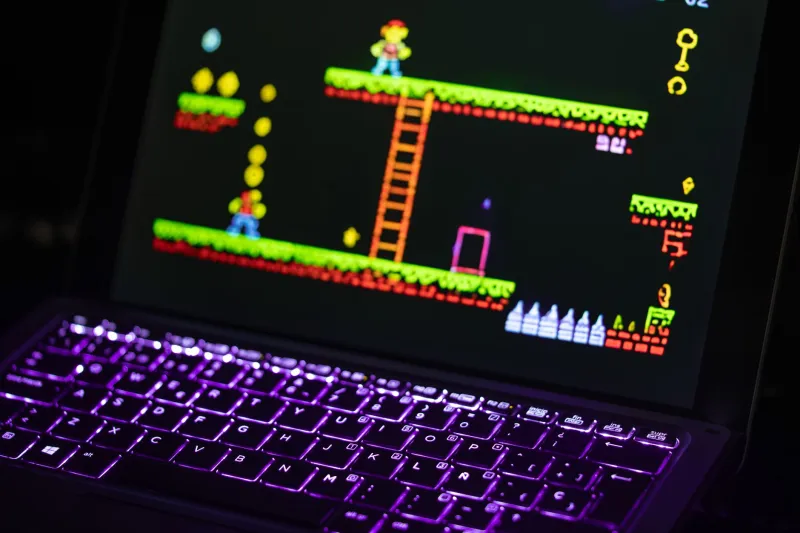
Smaller studios are increasingly thinking along similar lines. The indie scene is full of games built around gentle repetition: idle games that tick along in the background, crafting games built on satisfying loops, narrative games where you return to the same town every day and watch it slowly change. The common thread is that the repetition is visible. You can see what you've done. You can see how it adds up.
That visibility is everything. One of the most demoralizing things about real-world tasks is that they erase themselves. Games don't let that happen. Your farm looks different today than it did last week. Your character is stronger. Your village is bigger. The work sticks.
The Comfort of Knowing What Comes Next
There's another layer to this that doesn't get talked about enough: predictability as comfort.
For a lot of people — especially those dealing with anxiety, burnout, or just the general chaos of modern American life — unpredictability is exhausting. The news is unpredictable. Work is unpredictable. Relationships are complicated. But in a cozy game, you always know roughly what's going to happen when you log in. Your crops will be ready. Your villagers will have something to say. The shop will be open.
That consistency creates a kind of psychological safety that's genuinely hard to find elsewhere. It's not escapism in the avoidance sense — it's more like visiting a place where the rules are clear and the outcomes are fair. A lot of us don't get enough of that in daily life.
Why This Matters for How You Play
Understanding why repetitive game loops feel good isn't just an interesting trivia fact — it can actually change how you approach your gaming time.
If you've ever felt vaguely guilty about spending an hour doing the same thing in a game, consider this your permission slip to stop. You weren't wasting time. You were probably in flow. You were giving your brain a structured, low-stakes environment to process, reset, and recharge.
The milkmaid doesn't milk the cows because it's glamorous. She does it because it's grounding. Because there's something honest about a task that needs doing, gets done, and produces something real. Games have figured out how to bottle that feeling — and honestly, that's kind of remarkable.
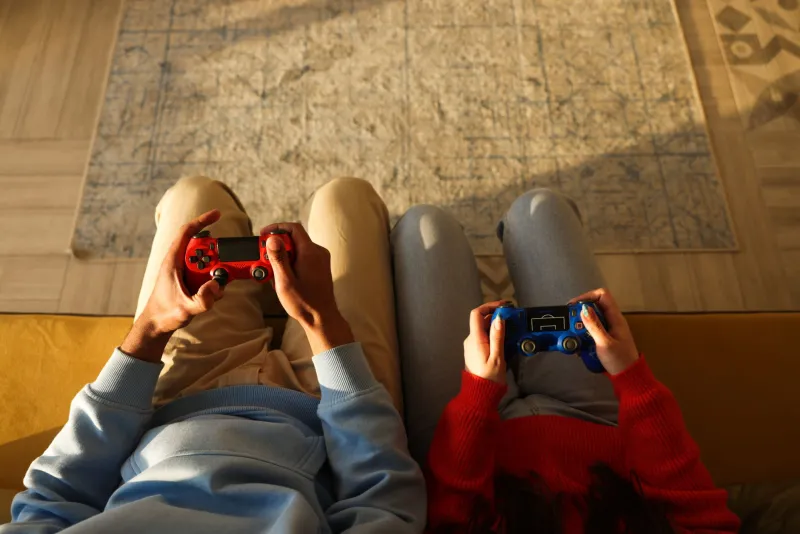
So the next time someone side-eyes you for spending another evening tending your virtual farm or running the same dungeon for the fifteenth time, you can tell them: you're not doing chores. You're meditating. The controller is just your preferred method.